Faunal Wealth
of
Andaman & Nicobar Islands
Designed and published by
Goodwill Estate, Corbyn’s Cove Road,
Port Blair
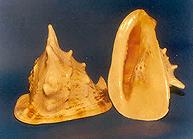
Cassis cornuta
(Helmet
Shell or King Shell)
 The
Helmet Shells are solid with large body whorls and short spires, usually with
blunt knobs. The animals live in sandy areas in the tropics and temperate zone,
in shallow and deep water. They prey on sea urchins and other echinoids. The
males tend to be smaller than the females with a slightly less expanded shield.
The
Helmet Shells are solid with large body whorls and short spires, usually with
blunt knobs. The animals live in sandy areas in the tropics and temperate zone,
in shallow and deep water. They prey on sea urchins and other echinoids. The
males tend to be smaller than the females with a slightly less expanded shield.
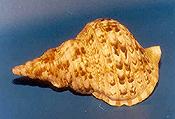
Charonia
tritonis
(Triton’s trumpets)
 It
is one of the world’s larger gastropods (the name implies that an animal of
this class crawls on its stomach). They live in sandy and rocky areas in deep
and shallow waters in the tropics worldwide. They are carnivorous, living on
echinoderms and mollusks. They have a long free swimming stage, after they are
hatched and before developing into the final form.
It
is one of the world’s larger gastropods (the name implies that an animal of
this class crawls on its stomach). They live in sandy and rocky areas in deep
and shallow waters in the tropics worldwide. They are carnivorous, living on
echinoderms and mollusks. They have a long free swimming stage, after they are
hatched and before developing into the final form.
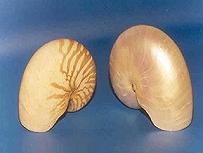
Nautilus pompilius
 Nautilus
is the sole survivor of an extensive group of varied forms, which have become
extinct. It has a calcareous chambered shell. The chambers are in a series of
plane spiral. As the animal grows, fresh chambers are secreted and the old ones
are separated by partitions. The soft body having numerous slender tentacles in
places of arms occupies the outermost chamber in the spiral.
Nautilus
is the sole survivor of an extensive group of varied forms, which have become
extinct. It has a calcareous chambered shell. The chambers are in a series of
plane spiral. As the animal grows, fresh chambers are secreted and the old ones
are separated by partitions. The soft body having numerous slender tentacles in
places of arms occupies the outermost chamber in the spiral.
Birgus
latro
(Robber Crab)
It
is the world’s largest land crab and is found in plenty in South Sentinel and
Great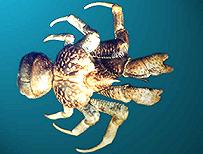 Nicobar Island. There is a popular belief that this crab can easily pluck
the coconut from the tree, peel off the husk and break open its shell.
Nicobar Island. There is a popular belief that this crab can easily pluck
the coconut from the tree, peel off the husk and break open its shell.
Phelsuma
andamanensis
(Andaman Islands day gecko)
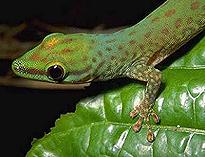 It
is native to the Andaman Islands. They are diurnal (active during the day) and
they have a clear plate covering their eyes and do not have eyelids. Day geckos
are capable of climbing up glasswalls and across ceilings, making them great
escape artist. In the wild day geckos feed on invertebrates,
nectar and pollen.
It
is native to the Andaman Islands. They are diurnal (active during the day) and
they have a clear plate covering their eyes and do not have eyelids. Day geckos
are capable of climbing up glasswalls and across ceilings, making them great
escape artist. In the wild day geckos feed on invertebrates,
nectar and pollen.
Laticauda
laticauda
(Andaman blind sea snake - an Amphibious sea Snake)
The
Amphibious Sea Snake, like other Sea Kraits, spends its time mainly at sea in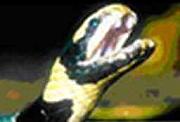 shallow tropical reefs and it frequently comes ashore to lay their eggs on land.
The attractive silver and black banding covers the entire body from the
neck area to the tip of the tail. The tail is laterally compressed and
rudder-like, making the snake an efficient underwater swimmer. They are venomous
which are ten times as strong as rattlesnake venom. The venom is composed of
powerful neurotoxins (affect nervous system).
shallow tropical reefs and it frequently comes ashore to lay their eggs on land.
The attractive silver and black banding covers the entire body from the
neck area to the tip of the tail. The tail is laterally compressed and
rudder-like, making the snake an efficient underwater swimmer. They are venomous
which are ten times as strong as rattlesnake venom. The venom is composed of
powerful neurotoxins (affect nervous system).
Lepidochelys
olivacae
(Olive ridley turtle)
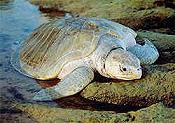 This
is a small marine turtle measuring less than 1.0 metre in length and weighing
upto 60kg. The head is large and triangular. Carapace is olive-grey in colour.
The turtle occurs in coastal waters as well as in open sea. Although the species
is widely distributed in tropical seas around the world, due to excessive
killing of adult and collection of eggs, it is being rarely encountered in these
islands.
This
is a small marine turtle measuring less than 1.0 metre in length and weighing
upto 60kg. The head is large and triangular. Carapace is olive-grey in colour.
The turtle occurs in coastal waters as well as in open sea. Although the species
is widely distributed in tropical seas around the world, due to excessive
killing of adult and collection of eggs, it is being rarely encountered in these
islands.
Macaca
fascicularis umbrosa
(Crab eating Monkey)
This
is the only species of monkey native to these islands and confined to thick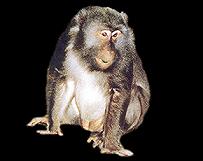 forest of the Nicobars. Its body is dark brown in colour. The tail is long and
used to hang from branches with great ease. It is quite active during the day.
The monkey feeds on fruits and nuts, but at times of scarcity of food, it is
forced to feed on crabs of the shore. The species is gregarious in habit and
moves in herds.
forest of the Nicobars. Its body is dark brown in colour. The tail is long and
used to hang from branches with great ease. It is quite active during the day.
The monkey feeds on fruits and nuts, but at times of scarcity of food, it is
forced to feed on crabs of the shore. The species is gregarious in habit and
moves in herds.
Dugong
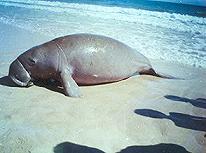 Popularly
known as sea cow, the dugong once enjoyed a wide distribution in the
Indo-pacific region. It is a seal-like marine mammal, bluish-grey in colour and
grows to a length of 2.3 m. It is sluggish and herbivorous, feeding on marine
grasses and algae. The cow gives birth to only one calf at a time. It was largely
hunted for its delicious meat, fat, oil and skin. With the result, its
population has completely disappeared from many places, making it the most
threatened marine mammal in the Indian Ocean. It is rarely encountered in a few
pockets in these islands. The dugong is now decidedly a diminishing species
deserving prompt protection.
Popularly
known as sea cow, the dugong once enjoyed a wide distribution in the
Indo-pacific region. It is a seal-like marine mammal, bluish-grey in colour and
grows to a length of 2.3 m. It is sluggish and herbivorous, feeding on marine
grasses and algae. The cow gives birth to only one calf at a time. It was largely
hunted for its delicious meat, fat, oil and skin. With the result, its
population has completely disappeared from many places, making it the most
threatened marine mammal in the Indian Ocean. It is rarely encountered in a few
pockets in these islands. The dugong is now decidedly a diminishing species
deserving prompt protection.
Passer
domesticus (Linnaeus)
(House
Sparrow)
It is
undoubtedly our most familiar bird, which was introduced at Ross Island during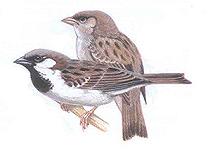 the second half of the 19th century. Male with grey crown, black lores and
around eye. Female ashy grey-brown above streaked with blackish and rufous.
Omnivorous, eats grains, insects fruit buds, flower nectar and kitchen scraps.
the second half of the 19th century. Male with grey crown, black lores and
around eye. Female ashy grey-brown above streaked with blackish and rufous.
Omnivorous, eats grains, insects fruit buds, flower nectar and kitchen scraps.
Rhyticeros
norcondami
(Narcondom
hornbill)
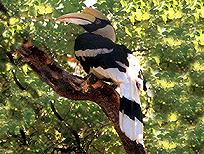 This is a medium-sized, black- bodied and
white-tailed resident bird, endemic to the volcanic Narcondom Island. It is
quite noisy and fearless of man. The bird moves in small groups and perches on
tall trees. It feeds on wild figs of the jungle. Because of its restricted
distribution to this tiny island, its present status is considered as quite
vulnerable. It is no doubt a rare bird requiring effective protection.
This is a medium-sized, black- bodied and
white-tailed resident bird, endemic to the volcanic Narcondom Island. It is
quite noisy and fearless of man. The bird moves in small groups and perches on
tall trees. It feeds on wild figs of the jungle. Because of its restricted
distribution to this tiny island, its present status is considered as quite
vulnerable. It is no doubt a rare bird requiring effective protection.
Megapodius
freycinet
(Megapode)
This is a fowl like bird confined to the dense forests
along seashores of Nicobar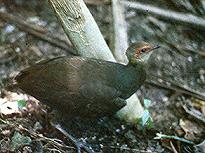 Islands. It is dull in colour, with long legs and
toes. Both the sexes are alike. The megapode is omnivorous, feeding on insects,
worms, snails, seeds, tubers etc. The bird incubates its eggs in a huge earthen
mound of vegetable matter. The decomposing leaves of the mound release the heat
necessary for the incubation of eggs. As this bird is not a good flier, it is
easily caught and killed. Over-exploitation for flesh and eggs has reduced the
species to an endangered position. Needs effective protection and
conservation.
Islands. It is dull in colour, with long legs and
toes. Both the sexes are alike. The megapode is omnivorous, feeding on insects,
worms, snails, seeds, tubers etc. The bird incubates its eggs in a huge earthen
mound of vegetable matter. The decomposing leaves of the mound release the heat
necessary for the incubation of eggs. As this bird is not a good flier, it is
easily caught and killed. Over-exploitation for flesh and eggs has reduced the
species to an endangered position. Needs effective protection and
conservation.
Acridotheres tristis (Linnaeus)
Indian Myna
It was introduced by Col. Tytler at Ross Island in
1867.It is very common and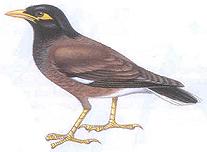 abundant through out South Andaman in cultivations
and in the neighborhood of homesteads, villages and town. A confirmed associate
of man, following wherever he opens up new habitations. Omnivorous. Eats fruits,
insects, kitchen scraps. Follows the plough for earthworms, etc., and attends on
grazing cattle for the grasshoppers.
abundant through out South Andaman in cultivations
and in the neighborhood of homesteads, villages and town. A confirmed associate
of man, following wherever he opens up new habitations. Omnivorous. Eats fruits,
insects, kitchen scraps. Follows the plough for earthworms, etc., and attends on
grazing cattle for the grasshoppers.
Francolinus pondicerianus (Gmelin)
(Grey Partridge)
This
bird was introduced in Port Blair in 1890. It is popularly known as ‘Safed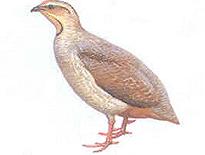 Teetar’. A plump, stub-tailed grayish brown game bird with chestnut blotching
above and fine wavy black and buff vermiculations, and chestnut tail. Throat
rufous-buff circumscribed by a broken blackish line. Sexes alike. Avoids heavy
forest and humid tracts.
Teetar’. A plump, stub-tailed grayish brown game bird with chestnut blotching
above and fine wavy black and buff vermiculations, and chestnut tail. Throat
rufous-buff circumscribed by a broken blackish line. Sexes alike. Avoids heavy
forest and humid tracts.
Designed and published by
Goodwill Estate,
Corbyn’s Cove Road,
Port Blair
About Science Centre,Port Blair Floral wealth of A & N Islands
For further information please contact : scpblair@sancharnet.in